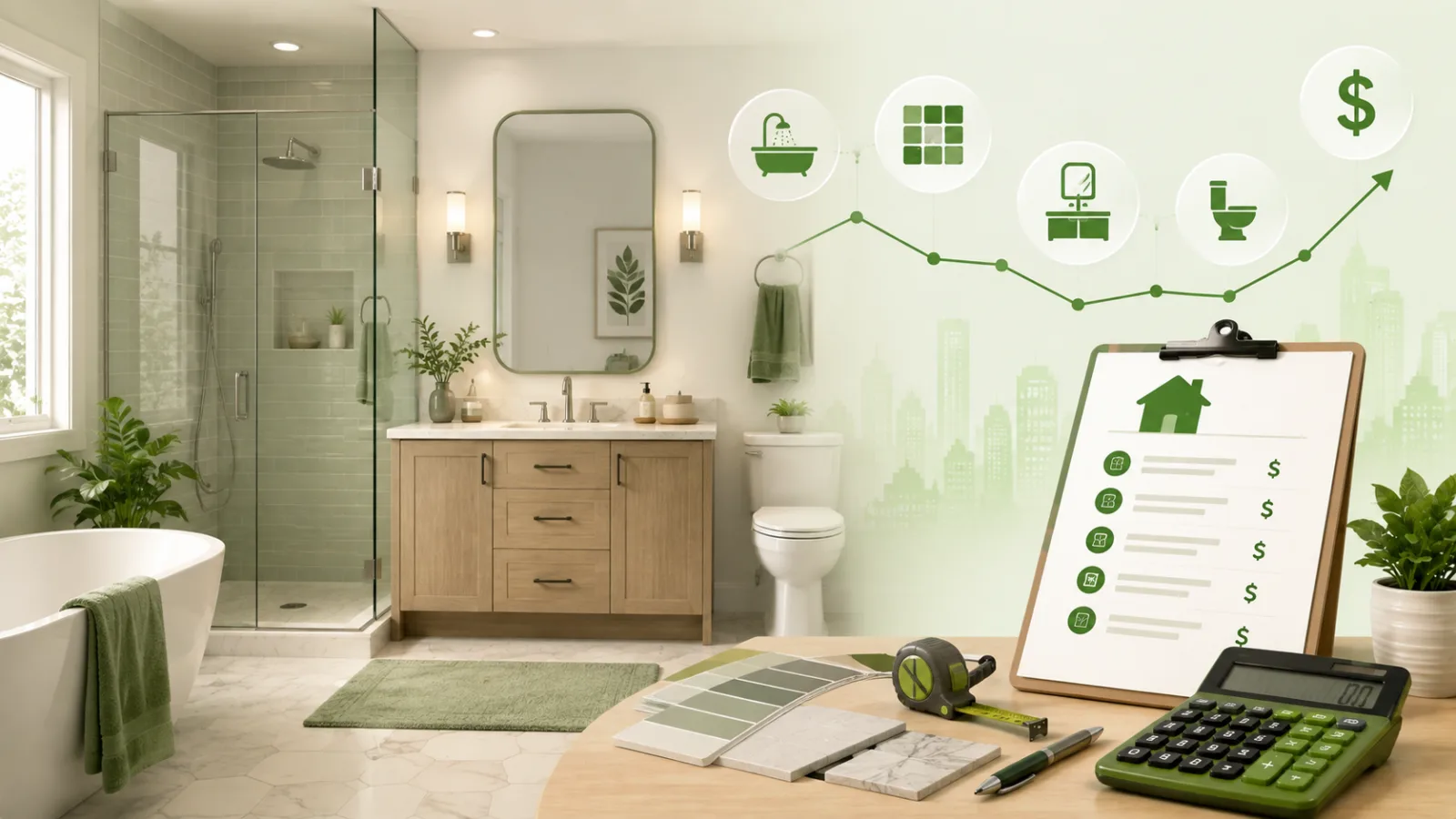
A bathroom is the most expensive room per square foot in most houses, because a small space contains plumbing, waterproofing, electrical work, tiling, ventilation and cabinetry — usually all from different trades, in a defined order, in a room two people cannot comfortably work in at once.
Here is what one actually costs in 2026, and where the money goes.
The three tiers
Cosmetic refresh — $3,000 to $6,000. Nothing moves. New vanity, new toilet, new taps, new mirror and lighting, repaint, possibly new flooring over a sound subfloor. Existing tile stays or is regrouted. This is the best value per dollar in the entire list, and for a bathroom that is dated rather than failing it is very often the right answer.
Mid-range remodel — $6,000 to $18,000. The typical full remodel. Everything comes out, the layout stays roughly where it is. New tiling to floor and shower, new waterproofing, new fixtures, new vanity, new ventilation, often a reconfigured shower. Most projects land here.
High end or reconfigured — $18,000 to $40,000+. The plumbing moves. Freestanding tub, walk-in shower with a linear drain, underfloor heating, double vanity, natural stone, custom glass, a wall relocated. Every one of those is a real cost, and moving the plumbing is the one that quietly drags the others up with it.
Where the money actually goes
On a typical mid-range project:
| Element | Share of budget |
|---|---|
| Labor across all trades | 40–55% |
| Tiling and waterproofing | 15–25% |
| Fixtures — tub, toilet, shower, sinks | 10–15% |
| Vanity and cabinetry | 8–12% |
| Plumbing rough-in and fittings | 8–12% |
| Electrical, lighting and ventilation | 5–8% |
| Permits and disposal | 2–5% |
The lesson in that table is that labor is the majority of the cost. Choosing a cheaper tile saves you a slice of a quarter of the budget; choosing a layout that does not need the plumbing moved saves you a slice of the half.
The four decisions that move the total most
1. Does the plumbing move? This is the big one. Keeping the toilet, shower and vanity roughly where they are can be the difference between the mid tier and the high one. Moving a toilet in particular means opening the floor and re-running a soil pipe with the right fall.
2. Tub or walk-in shower? Converting a tub to a walk-in shower typically runs $3,000 to $9,000 on its own, because it means new waterproofing, often a new drain position, and glass made to measure.
3. What size is the tile? Not what it costs per square foot — what size it is. Large-format porcelain covers ground quickly. Mosaic, hexagon, herringbone and natural stone are several times the labor per square foot, and stone usually needs sealing as well.
4. How old is the house? Behind the tile you may find rotten subfloor, failed waterproofing, corroded supply lines or wiring that is not to code. Reputable contractors will not price a fantasy — they will tell you it is possible and hold a contingency.
Budget 10–15% for what you cannot see
This is the single most useful piece of advice in this article. A bathroom is the room most likely to be hiding water damage, because it is the room with the water in it. Hold a contingency of 10 to 15% and treat it as part of the budget rather than a surprise.
What the timeline looks like
Two to four weeks for a mid-range remodel, and it is mostly sequencing rather than work: demolition, rough-in plumbing and electrical, inspection, waterproofing with its cure time, tiling with its cure time, then fixtures and finishing. Curing cannot be compressed, and a contractor who promises a full bathroom in five days is planning to skip something that matters.
If it is your only bathroom, plan for that honestly before work starts.
Comparing quotes properly
Ask each contractor for the same three things and the quotes become comparable:
- A line-by-line scope, by trade, saying what is and is not included.
- Who supplies the fixtures — you or them, and at what allowance.
- How waterproofing is specified. This should be an explicit line. Tile and grout are not waterproof; the membrane behind them is what protects the structure, and it is the most consequential hidden step in the whole project.
Starting with one part of it? Many bathroom projects begin as a single job — retiling, a new water heater, a toilet that has to be replaced. See who lists them near you: tiling → · water heater installation → · toilet repair and replacement →
On Task Masters you can book each trade separately, at prices published before you commit, and everything you book stays together in one account.